










Basal vs conventional implants comparison

Basal Implants vs Conventional Implants: What’sthe Difference?

If you are planning to replace missing teeth with dental implants, you may come across two common options: basal implants vs conventional implants. Both treatments are used in implant dentistry, but they work in different ways and are recommended for different situations.

Many patients visiting our dental clinic in Rajkot often ask the same question: Which implant is better, basal implants or conventional implants?

The answer depends on several factors like bone quality, treatment time, and overall dental health. In this guide, we will explain the difference between basal implants and conventional implants, how each procedure works, and how to decide which one might be suitable for you.

What Are Conventional Dental Implants?

Conventional implants are the most commonly used dental implants worldwide. These implants are placed into the jawbone where a tooth is missing.

After the implant is placed, the bone gradually grows around it and forms a strong connection. This process is called osseointegration, which allows the implant to become firmly attached to the jawbone.

Because the bone needs time to heal and integrate with the implant, the full treatment usually takes three to six months before the permanent crown is placed.

Main Features of Conventional Implants

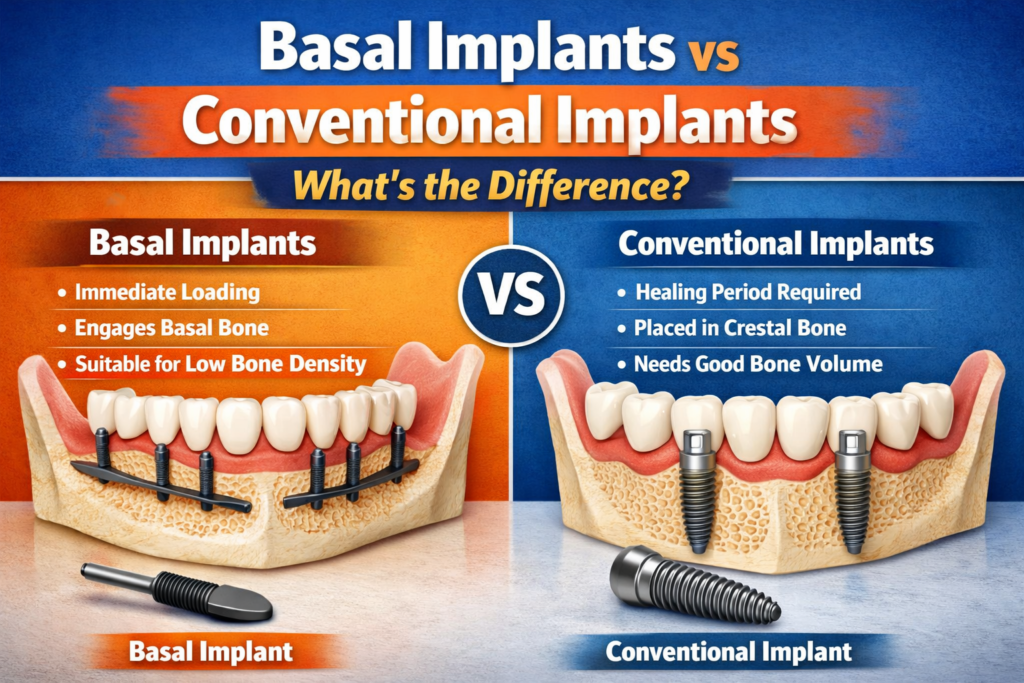
  • Placed in the alveolar bone (the softer part of the jawbone)
  • Require healing time of several months
  • Often involve a two-stage procedure
  • Sometimes require bone grafting or sinus lift surgery
  • Provide strong and long-term stability

Conventional implants are widely used because they have predictable long-term results and are supported by decades of clinical research.

What Are Basal Implants?

Basal bone remains strong even when teeth are missing for a long time. Because of this, basal implants can be used even when patients have significant bone loss.

Another key difference is the treatment speed. In many cases, teeth can be attached to basal implants within 48–72 hours, which means patients can receive fixed teeth much faster.

Main Features of Basal Implants

  • Placed in dense cortical bone
  • Often a single-piece implant design
  • Teeth can be fixed within a few days
  • Usually no bone grafting required
  • Suitable for patients with bone loss

Because of these advantages, basal implants are sometimes recommended for patients who cannot receive traditional implants due to bone loss.

Basal Implants vs Conventional Implants: Key Differences

Here is a simple comparison to understand the difference between basal implants and conventional implants.

1. Bone Used for Implant Placement

One of the biggest differences is the type of bone used.

Conventional implants are placed in the spongy alveolar bone, which may shrink after tooth loss. Basal implants, on the other hand, are anchored in the strong cortical bone, which is more stable and less likely to shrink.

Because cortical bone remains strong for longer periods, basal implants can work even when the jawbone has reduced significantly.

2. Treatment Time

Another major difference between basal implants and conventional implants is the treatment duration.

Conventional implants usually require three to six months of healing before the crown can be placed.

Basal implants allow immediate loading, meaning teeth can often be fixed within two to three days after the implant surgery.

For patients who want faster results, basal implants may be an attractive option.

3. Need for Bone Grafting

Many patients with missing teeth experience bone loss over time.

In such cases, conventional implants may require procedures like:

  • Bone grafting
  • Sinus lift surgery

These treatments help rebuild the bone before implant placement.

Basal implants usually do not require bone grafting because they are anchored in deeper, stronger bone layers.

This can reduce both treatment time and cost.

4. Implant Design

Conventional implants usually have a two-piece design, consisting of:

  • Implant screw
  • An abutment that connects to the crown

Basal implants are often single-piece implants, where the implant and abutment are part of the same structure.

This design allows faster placement and immediate loading of teeth.

5. Stability and Integration

Conventional implants depend on osseointegration, which means the bone cells grow around the implant and create a biological bond.

Basal implants rely more on mechanical fixation in the cortical bone.

Both approaches can work well when done by experienced implant dentists, but they function differently.

Advantages of Conventional Implants

Conventional dental implants remain the standard treatment in implant dentistry for many reasons.

Benefits include:

  • Long-term stability
  • Natural look and feel
  • Strong chewing ability
  • Easy repair if needed

Because the implant integrates biologically with the bone, it often provides very reliable long-term results.

Advantages of Basal Implants

Basal implants also offer several benefits, especially for specific patients.

Advantages include:

  • Faster treatment time
  • Immediate fixed teeth
  • No bone grafting required
  • Suitable for patients with bone loss
  • Fewer surgical procedures

For patients who want a quick tooth replacement solution, basal implants may be a practical option.

Which Implant Is Better?

There is no single answer to whether basal implants vs conventional implants are better.

The right option depends on:

  • Bone condition
  • Number of missing teeth
  • Overall oral health
  • Budget and treatment timeline

For example:

  • Patients with good bone density may benefit from conventional implants.
  • Patients with severe bone loss may be better candidates for basal implants.

A qualified implant dentist will examine your jawbone using X-rays or scans before recommending the right treatment.

Frequently Asked Questions

What is the difference between basal implants vs conventional implants?

Basal implants are placed in the strong cortical bone and allow faster treatment, while conventional implants are placed in the jawbone and usually require several months of healing.

Which implant is better, basal implants vs conventional implants?

Both have benefits. Conventional implants are widely used with proven long-term results, while basal implants are useful for patients with bone loss.

Do basal implants require bone grafting?

In most cases, basal implants do not require bone grafting because they are anchored in deeper and stronger bones.

How long do conventional dental implants take?

Traditional dental implant treatment usually takes 3–6 months for the implant to integrate with the bone.

Choosing the Right Dental Implant in Rajkot

If you are considering dental implants in Rajkot, the most important step is choosing an experienced dentist who understands the difference between basal implants vs conventional implants.

A proper consultation should include:

  • Detailed oral examination
  • Jawbone scan
  • Discussion about treatment options
  • Cost and timeline explanation

This helps ensure you receive the implant treatment that best suits your needs. Our team at Harsha Dental and Facial Surgical Hospital, Rajkot will examine your bone condition and explain the difference between basal implants vs conventional implants and help you choose the treatment that suits you best.

Clear guidance. Transparent treatment options. Experienced dental care.

If you’re considering dental implants in Rajkot, you can call us or visit the clinic to schedule a consultation.
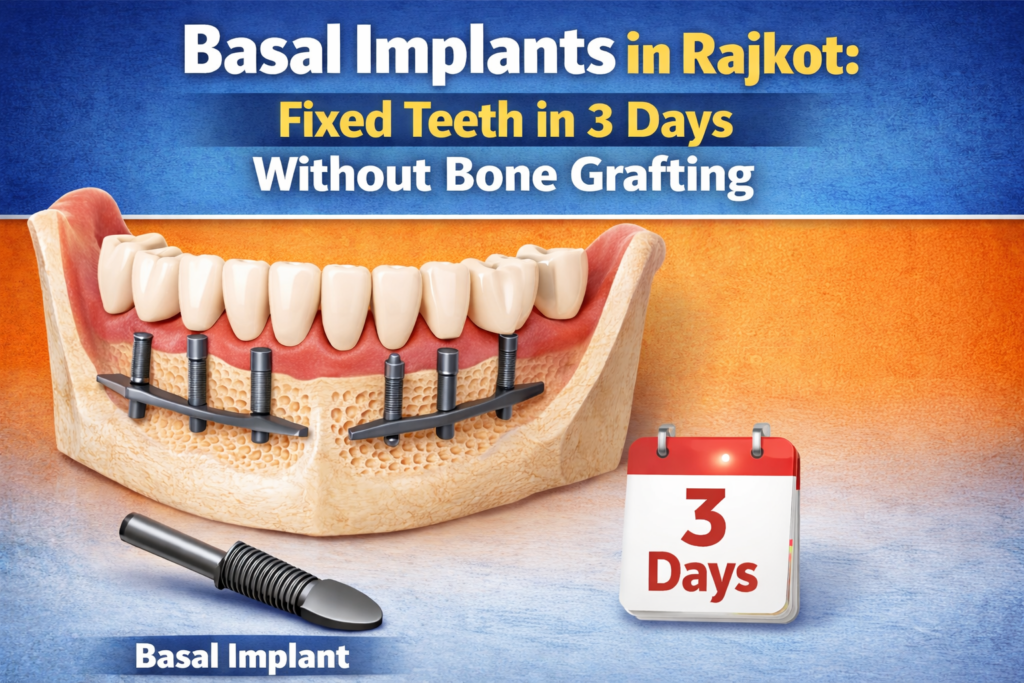
Basal implants in Rajkot overview

Basal Implants in Rajkot: Fixed Teeth in 3 Days Without Bone Grafting

Missing teeth can affect more than just your smile. It affects how you eat, how you speak, and how confident you feel in everyday life. For a long time, people with significant bone loss were told that dental implants were not an option for them. But that is no longer the case.

Basal implants are changing the way patients with bone loss, failed traditional implants, or long-standing missing teeth get their smile back permanently, and in as little as 72 hours.

At Harsha Dental and Facial Surgical Hospital, Rajkot, our team of implantologists has extensive experience in basal implantology, helping patients who were previously turned away from conventional implant treatment.

What are Basal Implants?

Basal implants, also called cortical implants or bicortical implants, are a type of dental implant that anchors into the basal (cortical) bone — the dense, hard layer of the jawbone that lies deeper than the regular spongy bone.

Traditional dental implants are placed in the alveolar bone, which is the bone directly supporting teeth. This bone tends to shrink over time, especially after tooth loss or gum disease. When there is not enough of it, conventional implants need a bone graft procedure before placement, adding months to the treatment.

Basal implants skip all of that. Since the cortical bone is denser and does not resorb (shrink) the way alveolar bone does, it provides a strong, stable anchor, even in cases where the jawbone is severely compromised.

How Are Basal Implants Different from Traditional Implants?

Here is a simple breakdown of how the two differ:

Basal ImplantsTraditional Implants
Bone usedCortical (basal) boneAlveolar (spongy) bone
Bone graft needed?NoOften required
Time to fixed teeth72 hours3–6 months
Suitable for bone loss?YesUsually not without grafting
DesignSingle-pieceTwo-piece (screw + abutment)
ProcedureSingle appointmentMultiple visits

The biggest advantage of basal implants is immediate loading, your fixed teeth can be placed within 3 days of the implant surgery. There is no long waiting period.

Who is a Good Candidate for Basal Implants in Rajkot?

Basal implants are not just for one type of patient. They work well for a wide range of cases, including:

  • People with low bone density or significant bone loss in the jaw
  • Patients who have been told they are not eligible for traditional implants
  • People who previously had failed dental implants
  • Those with a history of gum disease (pyorrhoea)
  • People who have been wearing removable dentures for several years
  • Anyone who wants fixed teeth quickly without going through bone grafting and a long
    healing period

If you have been living with missing teeth because you assumed implants were not possible for you, basal implants could be the option you have been waiting for.

The Basal Implants Procedure at Harsha Clinic, Rajkot

Here is what the treatment process typically looks like at our clinic:

Step 1 – Consultation and Imaging

We start with a thorough examination and a CBCT scan or OPG X-ray. This gives our implantologist a complete, 3D view of your jaw structure and helps plan the exact placement of the implants.

Step 2 – Implant Placement

The basal implants are placed in a single surgical appointment. Because they go into the dense cortical bone, they achieve immediate stability, there is no waiting for bone to “fuse” the way traditional implants require.

Step 3 – Fixed Teeth in 72 Hours

Within three days of the surgery, your fixed prosthesis (teeth) is attached. You walk out with a functional, natural-looking set of teeth far sooner than any conventional implant process would allow.

Step 4 – Follow-Up

We schedule regular follow-up appointments to monitor healing and long-term implant health.

Why Patients in Rajkot Choose Harsha Hospital for Basal Implants

At Harsha Dental and Facial Surgical Hospital near Hanuman Madhi Chowk, Raiya Road, we have been a trusted name in oral and maxillofacial surgery for years. Our lead implantologist, Dr. Maitrey Bhalodia, is a consultant in basal implantology across multiple implant centers in India, including Delhi, Mumbai, Ahmedabad, and Rajkot.

A few things that set us apart:

  • Specialisation in immediate loading basal implantology
  • Membership in the Immediate Placement and Loading Implant Academy (IPL)
  • Fully digital, paperless workflow with advanced imaging
  • A dedicated oral surgery team with experience in complex implant cases
  • Transparent pricing and personalised treatment plans

We work with patients who have been told “implants are not possible” and find solutions, that is something we take pride in.

Are Basal Implants Safe?

Yes, when placed by a trained and experienced implantologist, basal implants have a high success rate. The cortical bone, being denser and less prone to infection and resorption, actually provides a stable long-term foundation.

That said, the expertise of the treating doctor matters a great deal with basal implants. The procedure requires specialized training in basal implantology, which is why it is important to choose a clinic with a certified and experienced implant team.

At Harsha Clinic, our team has undergone specific training in this technique and has successfully completed basal implant procedures for patients across Rajkot and Gujarat.

Basal Implants vs. Dentures: Why Make the Switch?

Many patients consider dentures as the default solution for multiple missing teeth. But dentures come with real, daily inconveniences they slip while eating, they need adhesives, they can feel uncomfortable, and they do not stop bone loss.

Basal implants give you fixed teeth that function like natural ones. You eat what you want, speak clearly, and do not have to worry about your teeth moving. And unlike dentures, basal implants actually help maintain the bone structure of your jaw.

Frequently Asked Questions About Basal Implants in Rajkot

How much do basal implants cost in Rajkot?

The cost depends on the number of implants, the extent of bone loss, and the type of prosthesis used. We provide a detailed treatment plan and cost estimate after your CBCT scan. Contact Harsha Clinic for a personalized consultation.

Is the basal implant procedure painful?

The procedure is done under local anesthesia, so you will not feel pain during the surgery. Mild soreness for a day or two after is normal, and our team will guide you on postoperative care.

How long do basal implants last?

With proper oral hygiene and regular check-ups, basal implants can last many years. The cortical bone they are anchored in is highly stable and resistant to resorption, which supports long-term durability.

Can basal implants be placed in both upper and lower jaws?

Yes. The cortical bone is present in both arches, and basal implants can be successfully placed in the upper and lower jaws, even in areas where traditional implants may not be feasible.

What if I had traditional implants that failed?

Basal implants are often used to rehabilitate patients who have experienced conventional implant failure. Since they use a different bone layer, they can work even when the alveolar bone has been compromised.

Book a Consultation at Harsha Dental Hospital, Rajkot

If you are looking for basal implants in Rajkot and want to understand whether this treatment is right for you, the first step is a consultation.

Our team at Harsha Dental and Facial Surgical Clinic will assess your bone condition, walk you through your options, and give you a clear picture of what treatment will look like.

Fixed teeth. No bone graft. As fast as 72 hours. Call us or visit the clinic to schedule your appointment today.